
Optimizing Long-Term Retention through PostGradDC Continuing Education
Written by: James Demetrious, DC, DABCO
Board-Certified Chiropractic Orthopedist
Founder and CEO, PostGradDC
In the landscape of lifelong clinical education, mastering complex material isn’t just about exposure, it’s about retention. Traditional study methods often fail to promote enduring knowledge. This is where spaced repetition, an evidence-based active learning strategy, becomes a game-changer for clinicians engaged in PostGradDC continuing education.
The Science Behind Spaced Repetition
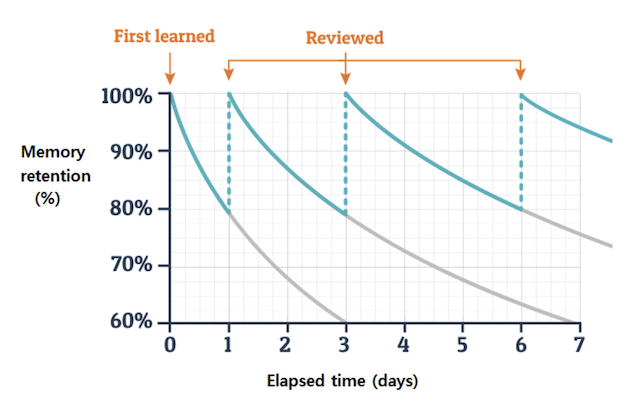
Spaced repetition refers to a learning technique that strategically spaces review sessions over time to combat the brain’s natural forgetting curve. Without reinforcement, newly learned information decays rapidly; spaced repetition ensures that material is revisited at increasing intervals so that recall strengthens and transitions into durable long-term memory.
The theoretical underpinning of spaced repetition, often called the spacing effect, has roots in research demonstrating that spreading learning over time improves memory retention more effectively than cramming. Psychologists have shown that learners who revisit material after increasing delays better reinforce neural pathways, leading to lasting memory.
Moreover, spaced learning has been associated with enhanced episodic memory through improved neural pattern reinstatement, suggesting that the brain not only retains information longer but does so more robustly with spaced exposure.
Active Learning and Long-Term Retention
Active learning strategies like spaced repetition leverage two critical principles: active recall and distributed practice. Active recall or testing oneself by retrieving information strengthens memory more effectively than passive review. Distributed practice, the spacing of study over time, reduces the rate at which information is forgotten and supports long-term retention.
Our PostGradDC course offerings combines both; learners repeatedly retrieve information at gradually expanding intervals, which promotes stronger encoding and more resilient memory traces.
For clinicians engaged in ongoing professional development, this approach means less time spent “re-learning” forgotten content and more time applying retained knowledge directly to clinical practice. For example, repetition of diagnostic criteria, evidence-based guidelines, or procedural steps across spaced intervals ensures that these core competencies stay top-of-mind during patient care.
Integration into PostGradDC Coursework
At PostGradDC, the intentional incorporation of spaced repetition principles into our coursework enhances the efficacy of our continuing education offerings. Rather than expecting participants to memorize content in a single sitting, our educational design introduces key concepts early and systematically reintroduces them throughout a curriculum using periodic quizzes, review prompts, and targeted practice questions. This scaffolding mirrors the core tenets of spaced learning, short, spaced, and actively engaging review episodes that align with real clinical timelines.
Conclusion
Clinical excellence depends on retention as much as acquisition. By embracing spaced repetition, clinicians can transform their learning habits from transient familiarity to lasting competence. When PostGradDC built spaced repetition into course design, we didn’t just teach information, we equipped clinicians with a cognitive strategy for lifelong mastery. Incorporating spaced repetition into your study routine will not only optimize learning outcomes but also elevate your clinical confidence and patient care quality.

PostGradDC offers advanced post-graduate chiropractic continuing education. Our founder, Dr. James Demetrious, is a distinguished board-certified chiropractic orthopedist, educator, author, and editor.
© 2026 – James Demetrious, DC, DABCO. Open Access. Unrestricted use, distribution, and reproduction are allowed in any medium, provided you give appropriate credit by citing the original author and source: Demetrious J. Optimizing Long-Term Retention through PostGradDC Continuing Education PostGradDC.com; 2026.
