

Earning America’s Trust
Written by James Demetrious, DC, DABCO
Board Certified Chiropractic Orthopedist
A patient sleeps through the night after weeks of discomfort. A parent returns to work. A grandparent feels comfortable lifting a child again. For the chiropractor who helped them, these moments are reminders of the importance of chiropractic care. The relief we afford our patients is a starting point for explaining chiropractic’s value to the public.
Favorable Experiences
People want to feel better, understand what is wrong, and know that someone is listening. They need confidence that their doctor’s recommendations serve their interests. Chiropractic has encouraging evidence of these relationships.
The 2018 Gallup-Palmer survey asked Americans who received care for significant neck or back pain about their providers. Chiropractic patients reported particularly favorable experiences with listening, compassion, communication, and access.
| Patient-reported measure | Chiropractors | Medical doctors | Physical therapists |
| Trust was a major reason for choosing the provider | 53% | 30% | 25% |
| Perceived safety was a major reason for choosing the provider | 54% | 16% | 50% |
| Perceived effectiveness was a major reason for choosing the provider | 52% | 23% | 42% |
| Provider often listened | 93% | 72% | 88% |
| Provider often demonstrated care and compassion | 91% | 66% | 86% |
| Provider often explained things well | 88% | 67% | 83% |
| Provider often provided convenient, quick access | 93% | 53% | 86% |
These findings describe patients’ reasons for choosing providers and their reported experiences.
There is much to appreciate in these findings. Patients valued being heard and treated with compassion. Trust helped bring many of them through the door. The 53% figure means that trust was a major reason for choosing a chiropractor.
Public opinion also reminds us that we have work to do. In Gallup’s separate 2023 survey, 33% of American adults rated chiropractors’ honesty and ethical standards high or very high, compared with 56% for medical doctors.
These surveys asked different questions of different populations, so they cannot establish that chiropractic treatment changes public trust. Together, however, they suggest an opportunity to help more Americans understand the qualities patients appreciate in chiropractic care.
How to Improve?
We can begin with everyday conversations. Explain what the examination suggests, what remains uncertain, and how treatment may help. Discuss costs and agree on goals. Let patients know when progress will be reassessed and what will happen if they do not improve. A thoughtful referral can earn as much confidence as a successful treatment.
The same honesty belongs in our public communication. Research findings should be explained within their limitations. An association between chiropractic care and reduced medication use or surgery is meaningful and should be shared in context with those studies. A grateful patient’s story can be meaningful without becoming a promise to everyone else.
Negative commentary requires similar judgment. An alarming video or an individual practitioner’s conduct should not fairly represent an entire profession. Still, we should listen before responding. A patient describing harm deserves compassion. A legitimate criticism deserves consideration. A false claim deserves a clear, referenced correction. Address what was said, explain the evidence, and acknowledge what is unknown.
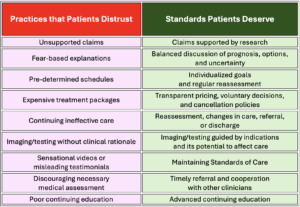
The World Health Organization supports communication with an emphasis on transparency and correcting misconceptions. Professional organizations and educators can help by providing accessible resources and responding to consequential misinformation without amplifying every provocation.
Our credibility also depends on addressing problems within chiropractic. We do not need to know how many practitioners engage in questionable conduct to recognize the importance of consistent standards.
Ongoing care may be appropriate when it is justified, freely chosen, and reassessed. Financial goals should never determine clinical recommendations. When concerns arise, patients need a fair way to be heard, and practitioners deserve a fair review.
We have good reason to be hopeful. Every patient heard, every honest explanation, and every sound clinical decision strengthens the profession. By combining compassionate care with scientific integrity, chiropractors can help more Americans recognize our value and give them lasting reasons to trust us.
At PostGradDC.com, education supports this responsibility. Better clinical reasoning, stronger communication, and a willingness to keep learning help doctors care for patients and represent chiropractic well.
References
- Gallup and Palmer College of Chiropractic. Gallup–Palmer College of Chiropractic Annual Report: Managing Neck and Back Pain in America. 2018.
- World Health Organization. Be transparent. WHO Strategic Communications Framework.

PostGradDC offers advanced post-graduate chiropractic continuing education. Our founder, Dr. James Demetrious, is a distinguished board-certified chiropractic orthopedist, educator, author, and editor.
© 2026 – James Demetrious, DC, DABCO. Open Access. Unrestricted use, distribution, and reproduction are allowed in any medium, provided you give appropriate credit by citing the original author and source: Demetrious J. Earning America’s Trust. PostGradDC.com; 2026.
