
The Quiet Mineral: Magnesium’s Underappreciated Role in Neuromusculoskeletal Health
Written by James Demetrious, DC, DABCO
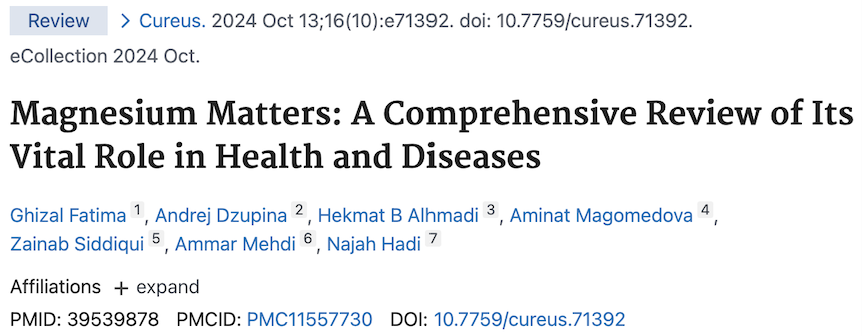
In the ever-growing body of evidence that supports integrative strategies for musculoskeletal care, magnesium warrants renewed clinical attention. The recent review by Fatima et al. (2024), “Magnesium Matters,” synthesizes the known physiological roles of magnesium (Mg) across muscle, bone, and nerve metabolism, offering a valuable reference point for chiropractic clinicians seeking adjunctive nutritional strategies to optimize patient outcomes.
Magnesium: A Multitasking Cofactor
Magnesium is pivotal in over 300 enzyme systems, especially those involved in ATP metabolism, ion transport (notably Na⁺/K⁺-ATPase), and calcium channel regulation. It acts as a natural physiological calcium antagonist, helping to moderate excitatory calcium influx and influencing neuromuscular excitability and vascular tone.
In the musculoskeletal system, approximately half of total body magnesium resides in bone, and another third in muscle and soft tissues. Its presence is essential for proper hydroxyapatite crystal formation (preventing brittleness), mitochondrial energy production, and maintenance of cellular homeostasis.
Clinical Evidence: Muscle Strength, Recovery, and Pain Modulation
From a functional standpoint, magnesium supports both contraction and relaxation of muscle fibers through finely tuned control of calcium and potassium flux. It contributes to mitochondrial oxidative phosphorylation and thereby supports energy production during sustained muscle activity.
Clinically, magnesium supplementation has been associated with modest improvements in muscle strength, reduced soreness, and enhanced recovery in populations with demonstrable deficiency. For example, in athletes or individuals with suboptimal magnesium status, extra intake may reduce post-exercise muscle pain and inflammation.
Moreover, magnesium’s role in blocking N-methyl-D-aspartate (NMDA) receptors can help attenuate central sensitization, offering a potential modulatory pathway in chronic musculoskeletal pain. In effect, magnesium can act as a mild relaxant, vasodilator, and neuromodulator qualities especially relevant in patients with persistent myofascial or soft tissue pain.
Bone Health, Connective Tissues, and Injury Resilience
Magnesium’s importance extends into bone remodeling: insufficient magnesium is linked with decreased bone mineral density and increased fragility, especially in aging populations. Epidemiologic analyses show that low dietary magnesium correlates with increased risk of osteoporosis and fracture.
Beyond mineralized tissue, emerging evidence suggests magnesium deficiency may impair connective tissue homeostasis by influencing collagen cross-linking enzymes, matrix metalloproteinases, and glycosaminoglycan metabolism, thus potentially weakening tendons, ligaments, and fascia over time.
From the chiropractic viewpoint, ensuring robust connective tissue resilience is a fundamental goal. Suboptimal magnesium levels may subtly predispose patients to microtrauma, slower healing, and increased susceptibility to overuse injury.
Practical Considerations for Chiropractors
- Screening and risk stratification. Consider patients with chronic muscle pain, cramping, fatigue, or prolonged recovery as at-risk for marginal magnesium insufficiency. Also, common risk factors such as aging, gastrointestinal malabsorption, diabetes, diuretics, proton-pump inhibitors, and heavy caffeine or alcohol intake may lower magnesium stores.
- Diet first, supplement second. Encourage consumption of whole food sources rich in magnesium: dark leafy greens, nuts, seeds, legumes, whole grains, and minimally processed foods. Since Western dietary patterns tend to underdeliver magnesium (often achieving only 30–50 % of the RDA), dietary optimization is a reasonable first line step.
- Supplement selection and dosing. If supplementation is warranted, choose bioavailable forms (e.g., magnesium citrate, glycinate, malate) over oxide forms with poor absorption. Start with moderate incremental dosing (e.g., 200–400 mg elemental Mg daily, split doses) while monitoring tolerance (especially GI). Avoid excessive dosing in impaired renal function.
- Clinical integration and monitoring. Pair magnesium correction with existing neuromusculoskeletal interventions (manipulation, soft tissue therapy, rehabilitative exercise). Monitor subjective pain, cramp frequency, recovery metrics, and consider periodic serum magnesium (though note that serum levels often poorly reflect tissue stores). Adjust doses based on the therapeutic response.
- Safety considerations. While magnesium is generally well-tolerated, overt supplementation in patients with renal insufficiency may provoke hypermagnesemia (manifesting as hypotonia, bradycardia, or respiratory depression). Clinician prudence, especially in comorbid populations, is advised.
- Confer with medical and nutritional specialists. Consider and discuss issues associated with magnesium to ensure proper utilization and avoid potential adverse effects.
Conclusion
Though magnesium may not be a silver bullet, it is a foundational “quiet mineral” whose deficiency undermines multiple physiological systems central to neuromusculoskeletal health. For chiropractic practitioners committed to integrative, patient-centered care, incorporating magnesium assessment and optimization, in synergy with manual and rehabilitative therapies offers a low-risk, high-potential adjunct. As always, further clinical trials are needed to define optimal dosing strategies for diverse patient populations.
Reference:
- Fatima et al. Cureus. 2024 Oct 13;16(10):e71392. doi: 10.7759/cureus.71392. eCollection 2024 Oct.
Disclosure
The information provided in this article and all PostGradDC coursework should not be considered standards of care. We offer this information for educational purposes only. This information is not intended to be a substitute for professional medical advice, diagnosis, or treatment. Always seek the advice of your physician or qualified healthcare provider with any questions you may have regarding medical conditions or treatment. Seek the opinion of your legal representative.

PostGradDC offers advanced post-graduate chiropractic continuing education. Our founder, Dr. James Demetrious, is a distinguished board-certified chiropractic orthopedist, educator, author, and editor.
© 2025 – James Demetrious, DC, DABCO. Open Access. Unrestricted use, distribution, and reproduction are allowed in any medium, provided you give appropriate credit by citing the original author and source: Demetrious J. PostGradDC. The Quiet Mineral: Magnesium’s Underappreciated Role in Neuromusculoskeletal Health. PostGradDC.com; 2025.
